THE ORIGIN OF THE UNIVERSE AND THE PROBLEM OF THE FIRST CAUSE
The existence of the universe is an undeniable reality that we observe and experience daily. However, understanding what caused the universe to come into existence remains one of the most profound and challenging questions in philosophy, theology, and science.
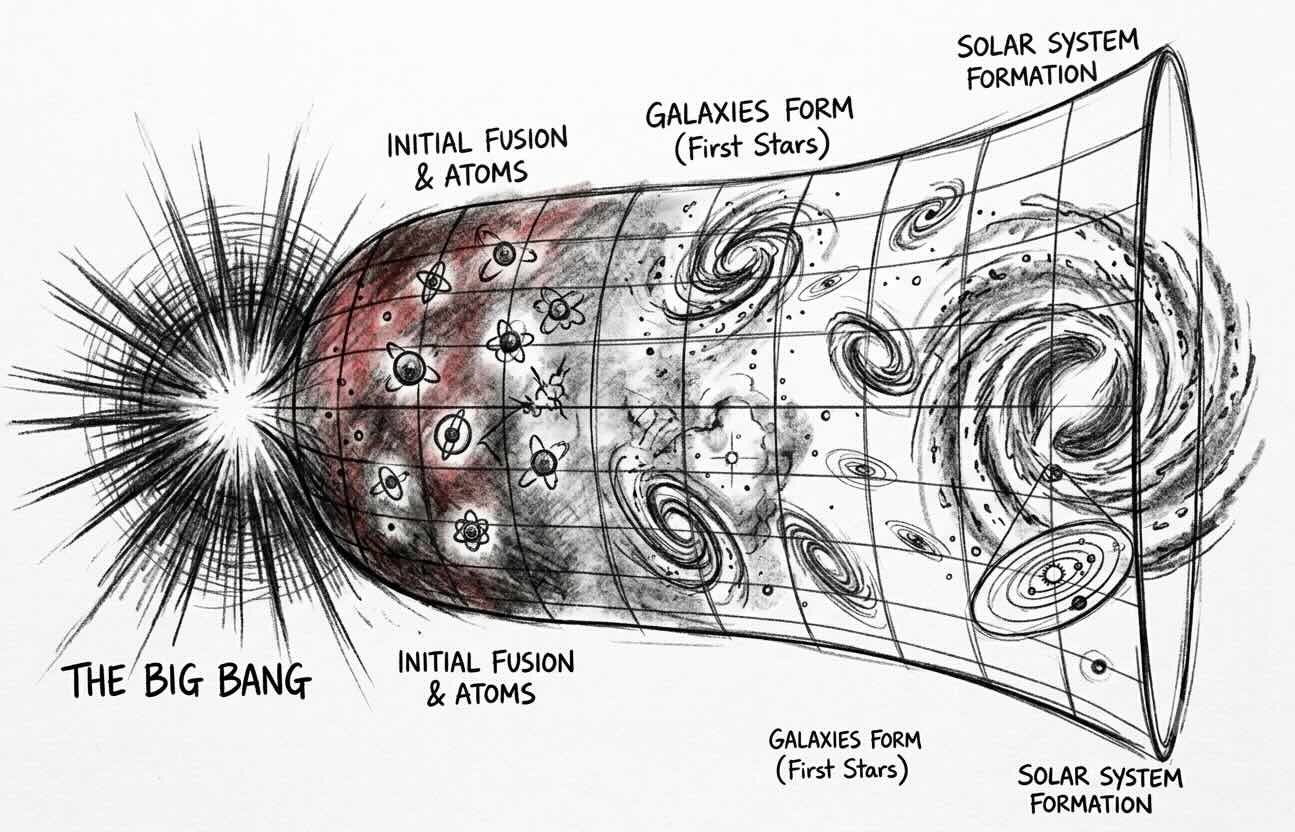
In the realm of science, the prevailing explanation for the origin of the universe is the Big Bang Theory. This theory posits that the universe began as an infinitely dense, hot, and compact singularity, which rapidly expanded and cooled, eventually forming the galaxies, stars, and planets we observe today.
While the Big Bang Theory provides a detailed account of the universe’s development over time, it does not directly address the question of what caused the initial singularity to exist or what, if anything, existed before it.
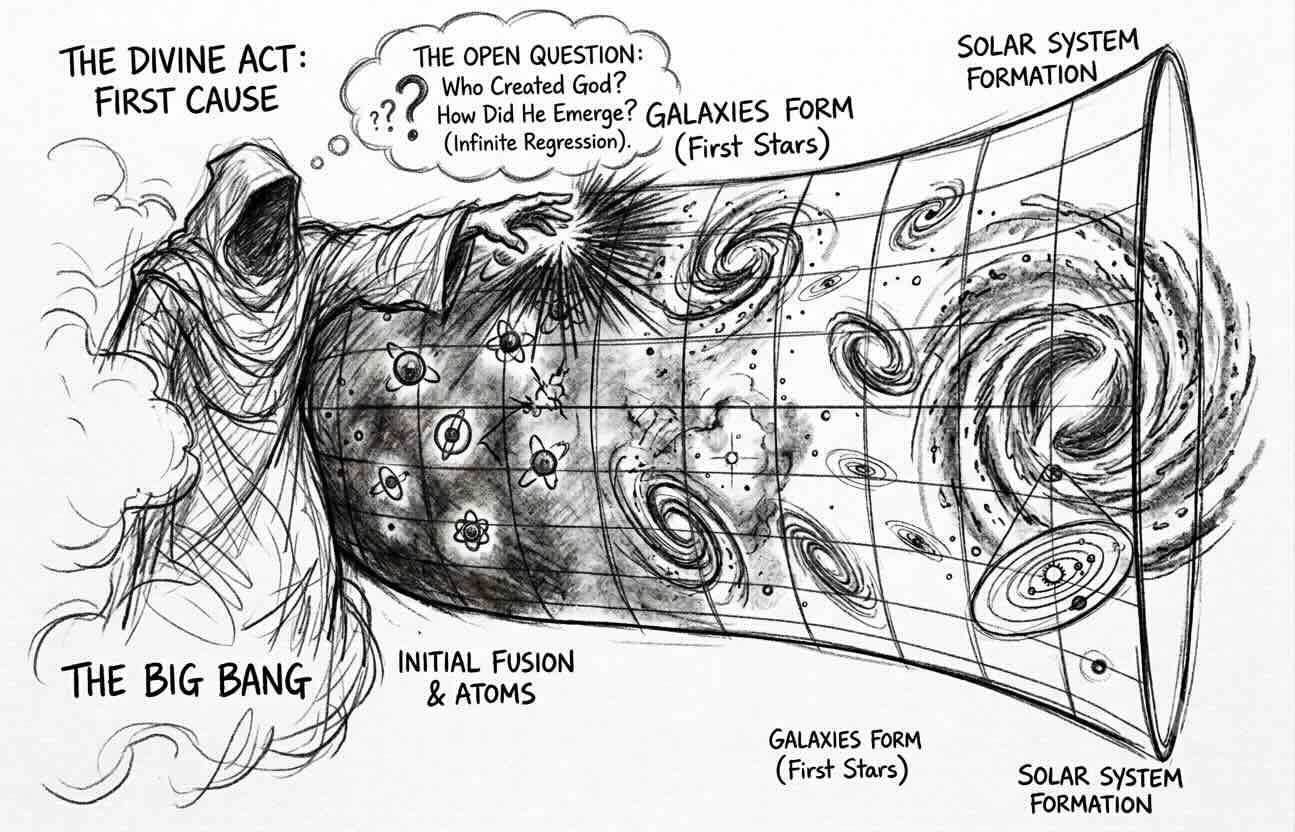
In religious and philosophical contexts, the concept of a first cause or prime mover is often proposed as the ultimate explanation for the universe’s existence. This first cause is typically identified as a transcendent, eternal, and omnipotent entity, such as God, who creates and sustains the universe. In this view, the existence of the universe is a direct result of the will and action of this supreme being. The existence of a perfect God is often taken as a given or an axiom in these discussions, without providing a direct explanation for God’s own existence. The idea of a perfect, eternal, and omnipotent God serves as the foundation for many religious and philosophical belief systems, and the acceptance of this axiom allows for a coherent understanding of the origin and nature of the universe.
Theology, as a discipline, often requires us to accept the existence of the absolutely perfect God without providing a comprehensive explanation for how exactly He came into being and attained His absolute perfection. This is because theology is primarily concerned with understanding the nature and attributes of God, His relationship with creation, and His role in the world from a religious and philosophical perspective. The concept of a perfect God is central to many religious belief systems, particularly in monotheistic traditions such as Christianity, Islam, and Judaism. These traditions posit that God is eternal, omnipotent, omniscient, and morally perfect.
However, the question of how exactly God appeared and became perfect is often left unanswered or is considered beyond human comprehension.
By accepting God’s existence without a detailed explanation, theology enables believers to make focus on the implications of divine grace and perfection for their own lives, such as the moral and ethical principles that can be derived from God’s nature and attributes. Furthermore, the acceptance of God without explanation is an act of faith, which is a crucial component of many religious traditions. Faith allows believers to trust in the existence and goodness of God, even in the face of uncertainty or the absence of complete understanding. In this way, the unexplained perfection of God can serve as a powerful catalyst for spiritual growth and development, as it encourages believers to cultivate a deeper relationship with the divine based on trust and humility.
Nevertheless, it is essential to recognize that this approach does not satisfy everyone, particularly those who seek a more rigorous, logical explanation for the existence and nature of God. The notion of a perfect God who knows exactly how He self-created Himself implies that perfectness and truth are specific and non-chaotic. The idea of an absolutely specific God, who possesses complete knowledge of His self-creation, suggests that there is an inherent order and structure to the divine realm.
This order and structure can be seen as a reflection of God’s perfect nature, which encompasses not only moral perfection but also the perfection of knowledge and understanding. While theology might not provide a detailed account of how God attained perfection, the belief in a perfect, self-created God who knows the exact process of His own creation opens up the possibility for a deeper exploration of divine perfection and the nature of ultimate truth. This exploration can contribute to a richer understanding of the divine realm and provide a basis for ongoing theological inquiry and spiritual growth.