THE FIRST CAUSE
The problem of the First Cause, also known as the Kalam’s cosmological argument, is a philosophical question that addresses the origin of the universe and the cause of its existence. It asks what, if anything, caused the universe to come into being.
The scientific explanation for the origin of the universe is the Big Bang theory. The current consensus is that the universe began with the Big Bang, which occurred approximately 13.8 billion years ago. According to the Big Bang theory, the universe was initially extremely hot and dense, and it rapidly expanded and cooled in the first few moments after the Big Bang. As the universe expanded and cooled, matter began to form, and eventually stars, galaxies, and other structures formed.
The question of what caused the Big Bang or what existed before it — is still an open in physics and cosmology. The Big Bang theory describes the evolution of the universe from a very early stage after the initial singularity, but it does not explain what caused the singularity to exist or what, if anything, existed before it.
The infinite regress
The logical problem of the first cause has the potential issue of infinite regress that it raises. The idea that every effect must have a cause is a fundamental principle of causality. However, when applied to the origin of the universe, this principle leads to a conundrum:
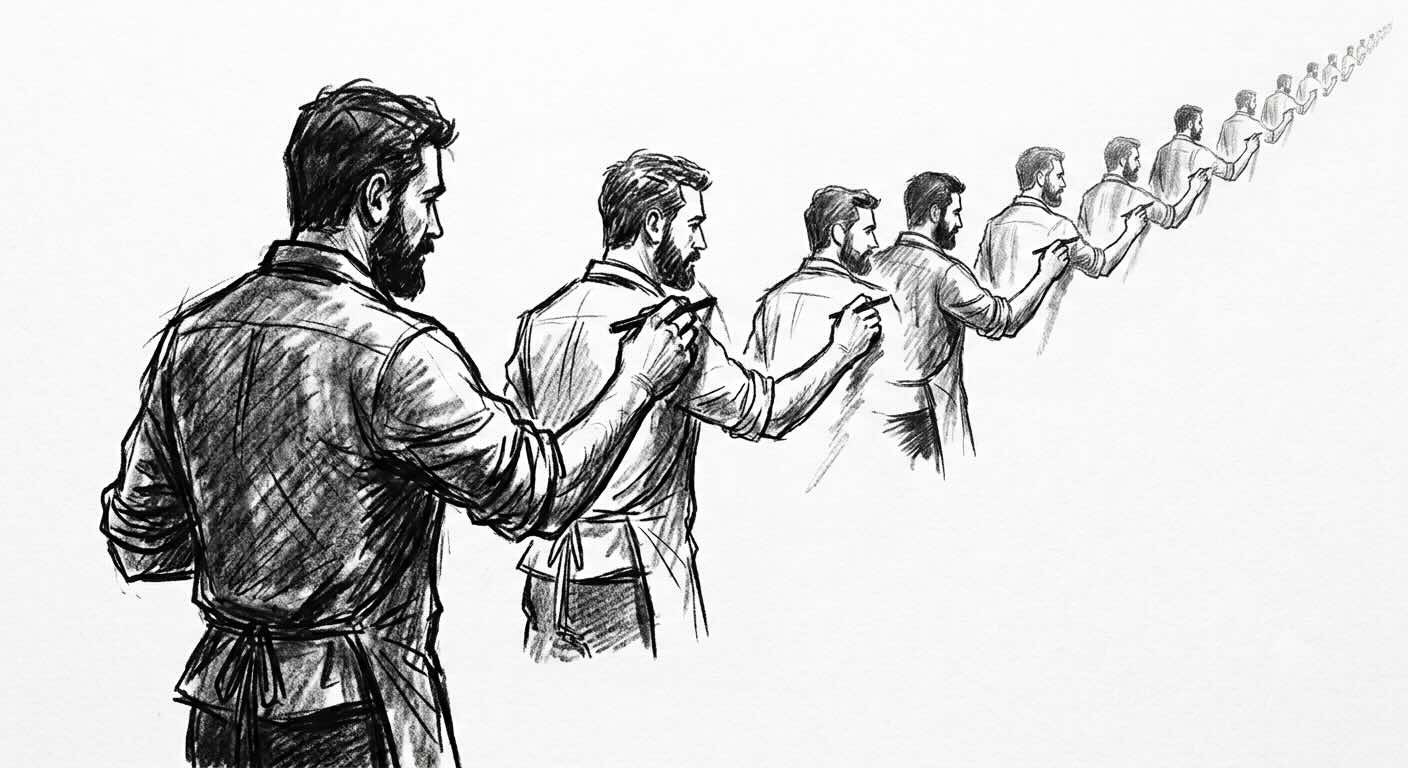
If every cause has a prior cause, then one might conclude that there is an infinite chain of causes stretching back in time, which seems problematic.
There must be a first cause or an uncaused cause that started the chain of events. Otherwise we end in infinite regress that leads nowhere and is not able to explain the existence causally.
The nothingness
The nothingness is seemingly a reasonable starting point for the start of universe. Nothingness, as the absence of everything, seems to be a unbiased state that does not require a prior reason or cause to exist. This idea is compelling because it eliminates the need for an explanation of why something exists rather than nothing, as there would be no prior state or cause to question.
But what is "nothingness"?